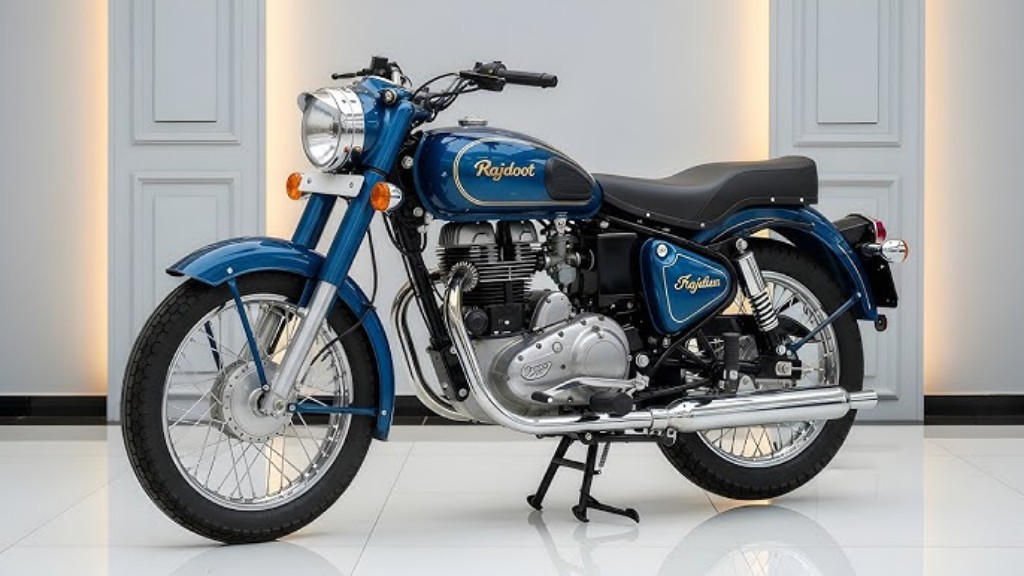
There was a time when the bold thumping sound of the Rajdoot 175 ruled Indian roads. Back in the 1980s, this motorcycle was not just a vehicle, it was a matter of pride for families. Whether in villages or growing cities, seeing a Rajdoot parked outside a house instantly showed strength and status. Even in 2026, people still talk about it with a smile, remembering how dependable and powerful it felt.
Strong Design That Meant Business
Rajdoot was known for its simple yet solid design. It came with large 19-inch wheels that handled rough roads comfortably. The drum brakes and telescopic front suspension were perfect for Indian conditions. Despite weighing around 115 kg, the bike felt stable and balanced while riding. Its 11.5-liter fuel tank allowed long rides without frequent stops, and the wide cushioned seat made journeys comfortable even on uneven roads.

Engine That Never Gave Up
Under the tank, Rajdoot carried a 175cc two-stroke single-cylinder engine. It produced around 9 bhp of power and delivered strong torque for daily use. The 4-speed gearbox offered smooth shifting, making it easy to ride even for beginners. With a top speed close to 90–100 km/h, it was considered quick for its time. What made it truly special was its ability to perform well in farms, villages, and hilly areas without losing strength.
Mileage and Everyday Practicality
For its era, Rajdoot delivered a mileage of around 35 to 45 km per liter, which was quite respectable. Yes, being a two-stroke engine, it consumed slightly more fuel compared to modern bikes, but maintenance was simple and affordable. Spare parts were easily available, and mechanics across India knew how to fix it. That practicality made it a trusted companion for daily work as well as long rural rides.

Price Then and Value in 2026
During the late 1980s and early 1990s, the Rajdoot was priced between ₹10,000 and ₹15,000, making it accessible for middle-class families. In 2026, finding one in good condition can cost anywhere from ₹20,000 to ₹50,000 depending on restoration and originality. Even today, it is not just about the price — owning a Rajdoot feels like owning a piece of India’s motorcycling history.